
Views: 0 Author: Site Editor Publish Time: 2026-09-30 Origin: Site
High-volume condition monitoring and quality control require true lab-grade accuracy. Facilities cannot afford the turnaround delays of outsourced testing. They also cannot justify the prohibitive footprint of traditional floor-standing systems. Shifting elemental analysis in-house often introduces severe operational risks. Teams struggle regarding detection limits, operator consistency, and strict standard compliance. Reliability programs fail when data arrives too late or lacks analytical rigor.
The OCI 1 bridges the distinct gap between basic field testers and heavy-duty laboratory equipment. This comprehensive guide breaks down its technical viability, operational footprint, and core mechanical advantages. We examine how it handles complex fluid matrices without extensive preparation. You will learn how to make an evidence-based procurement decision for your fluid monitoring program. By evaluating these parameters, you ensure your reliability team gets the exact diagnostic data they need.
Core Function: Delivers lab-grade elemental analysis with a focus on wear metals, contaminants, and additives.
Technology Match: Utilizes RDE (Rotating Disc Electrode) technology to process complex matrices (like opaque oils) with minimal sample preparation.
Best Fit: Optimal for facilities processing 50+ samples monthly requiring ASTM-compliant results without requiring a dedicated analytical chemist.
Limitation: Not suited for ultra-trace (parts-per-trillion) analysis where an ICP-MS would be mandatory.
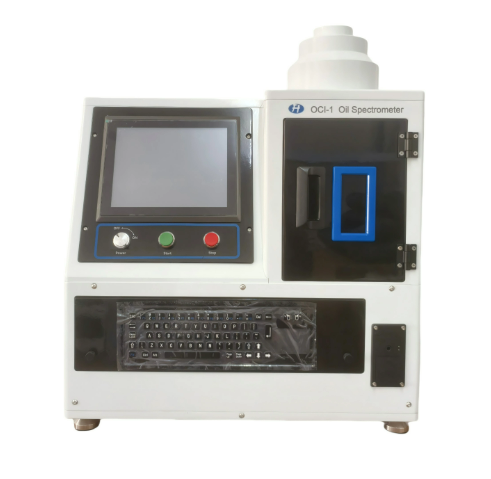
Waiting 48 to 72 hours for commercial labs severely impacts production lines. Equipment maintenance stalls during this critical window. Catastrophic wear can occur before you even receive the analytical report. Bringing this testing internal removes these dangerous blind spots. You regain immediate control over your asset health data.
You must establish strict benchmarks before acquiring new hardware. Accuracy remains the foremost priority. Your internal results must correlate perfectly alongside traditional ICP-OES benchmarks. Speed dictates operational flow. Sample-to-result time needs to stay consistently under two minutes. Finally, facility footprint dictates feasibility. A reliable benchtop analyzer requires standard electrical power. It should demand minimal HVAC adjustments or specialized exhaust plumbing.
Modern reliability teams transition from reactive maintenance to predictive asset management. A capable lab oil tester handles daily, localized fluid diagnostics. It keeps critical machinery running without unexpected downtime. Operators catch abnormal wear patterns early. They identify silicon spikes from dirt ingress immediately. They monitor additive depletion across heavy-duty gearboxes. This proactive approach saves millions in premature component failure.
Understanding the hardware mechanics prevents expensive misapplications. The internal architecture determines what fluids you can test effectively.
Limits of detection (LOD) define an instrument's true analytical value. The benchtop spectrometer oci 1 for lab analysis detects critical wear metals down to parts-per-million (ppm) levels. It quantifies Iron (Fe), Copper (Cu), Lead (Pb), and Silicon (Si) precisely. The instrument physically stabilizes its optical system against environmental vibrations. Built-in thermal controls prevent ambient temperature shifts from skewing your final readouts. This ensures repeatable accuracy during continuous shift work.
Rotating Disc Electrode Optical Emission Spectroscopy handles used fluids effortlessly. Opaque oils contain large, abrasive particulate matter. A robust RDE spectrometer excites these large wear particles directly using a high-voltage electrical arc. You must contrast this capability against traditional ICP systems.
ICP architecture requires heavy sample dilution. Technicians use harsh solvents to lower fluid viscosity. They must filter the sample to prevent severe capillary clogs. RDE technology completely eliminates these tedious preparation steps. You simply dip the graphite disc into the raw sample. The rotating disc carries the fluid directly into the analytical spark gap. This raw processing power reveals large fatigue particles often missed by conventional nebulizers.
Data management matters just as much as optical hardware. Modern diagnostic systems provide comprehensive, unalterable audit trails. Automated calibration curves reduce dangerous manual input errors. LIMS (Laboratory Information Management System) integration pushes your diagnostic data securely across enterprise networks. Managers access trending graphs instantly. They set customized alarm limits for specific machinery groups. The software flags abnormal results automatically, requiring zero manual interpretation.
We provide a transparent, skeptical-friendly evaluation framework here. Prevent mis-specification by understanding exact hardware boundaries.
You should choose an ICP system when you need multi-matrix versatility. ICP dominates when testing water, soil, and pure chemicals. It excels where sub-ppm precision remains strictly mandatory. However, ICP fails mechanically when analyzing heavy gear oils.
You choose the OCI 1 when processing dark, viscous fluids. As a dedicated oil spectrometer, it completely eliminates hazardous sample prep solvents. It processes 50-weight gear oils natively. This eliminates daily clogs and reduces hazardous chemical exposure for your lab technicians.
You choose XRF for non-destructive field sorting. Handheld units work best on solid metal alloys and scrap sorting. They identify steel grades rapidly on the factory floor.
You choose the OCI 1 for comprehensive liquid elemental analysis. Handheld XRF struggles immensely to read lighter elements. It routinely fails to quantify Lithium (Li), Beryllium (Be), and Boron (B) in fluids. The OCI 1 quantifies these light additive elements accurately. It provides the full elemental profile necessary for modern condition monitoring.
| Technology Type | Primary Application Matrix | Sample Prep Required | Large Particle Detection (>10µm) | Light Element Capability |
|---|---|---|---|---|
| OCI 1 (RDE-OES) | Viscous, used lubricating fluids | None (Direct analysis) | Excellent | High (Li, B, Na) |
| ICP-OES | Water, chemicals, diluted oils | High (Solvent dilution, filtration) | Poor (Nebulizer limits) | Excellent |
| Handheld XRF | Solid metals, alloys, soils | None (Non-destructive) | N/A (Surface level scan) | Poor (Struggles below Mg) |
Successful deployment requires careful facility planning. Hardware specifications mean nothing if your laboratory environment disrupts the instrument.
You must standardize your physical bench space early. The instrument requires a solid, vibration-free platform. Consider these essential facility prerequisites:
A dedicated 110V/220V stable power supply isolated from heavy industrial motors.
Localized exhaust ventilation if your safety codes require venting nominal ozone or spark fumes.
Climate control ensuring ambient temperatures remain between 15°C and 30°C.
Adequate storage space for referencing fluids and dry consumable parts.
Understand your ongoing physical materials list. Graphite discs, carbon rods, and reference standards form the core consumables. Each test consumes one disc and one rod to prevent cross-contamination. Environmental fluctuations introduce dangerous calibration drift risks. You mitigate this drift by implementing strict, daily standardization protocols. Operators must run a known standardization fluid every morning. They adjust the software offsets before processing live machinery samples.
Non-chemists need straightforward training timelines. Moving from manual spectral interpretation to software-driven automated alerts speeds up facility adoption. Technicians quickly learn to flag anomalies without studying complex optical physics. A standard operator masters routine sample processing within three days. They learn to clean the electrode stand, load the graphite, and initiate the software run autonomously.
Industry standards strictly dictate reporting validity. You must validate your internal workflow against established industrial frameworks. Heavy machinery manufacturers rely on ASTM D6595. This specific standard governs the analysis of wear metals and additives in used lubricating oils via rotating disc electrode. Adhering to this established standard proves your data quality. It ensures your internal lab results hold up during rigorous warranty claim investigations.
Evaluating specialized analytical hardware requires a structured, skeptical approach. You must look beyond the initial specification sheet. Ensure the manufacturer stands behind their equipment long after commissioning.
Hardware fails eventually without robust backing. You must evaluate your warranty terms carefully. Remote diagnostic capabilities save countless hours of downtime. The vendor should offer secure remote login features to troubleshoot software bugs instantly. Clarify the exact frequency of Preventative Maintenance (PM) visits before signing any contract. Understand who pays for travel time when a field engineer visits your site.
Define a rigid Proof of Concept (PoC) before committing to a platform. Never buy analytical hardware based on marketing brochures alone. Follow these standardized evaluation steps:
Pull five distinct, heavily used fluid samples from your worst-performing machinery.
Split these specific samples into identical twin bottles.
Send one batch to your trusted commercial ISO-accredited laboratory.
Submit the second blind batch to the instrument vendor.
Demand the vendor run the samples blindly and return the raw elemental data.
Compare the vendor's RDE readouts against the commercial laboratory's ICP baseline.
This verification process ensures the equipment meets your specific accuracy requirements.
The OCI 1 acts as a highly specialized workhorse. Industrial and commercial labs rely on it for robust, continuous fluid diagnostics. It removes the guesswork from condition monitoring by delivering immediate, lab-grade data. It processes dark, particulate-laden fluids effortlessly without requiring dangerous chemical solvents.
Stop waiting on external commercial labs to dictate your maintenance schedule. Evaluate your monthly sample volumes today. Request a virtual sample-run demonstration to see the software interface in action. Take definitive control over your fluid testing timeline and protect your critical assets.
A: No, it does not. Traditional OES and ICP systems depend heavily on ultra-pure argon gas to generate plasma and prevent interference. The OCI 1 utilizes rotating disc electrode technology in an ambient air environment. This eliminates the need for expensive gas cylinders, safety regulators, and restrictive plumbing inside your laboratory.
A: Yes. This remains a major advantage over traditional ICP instruments. ICP systems typically filter out or fail to vaporize particles larger than 5 to 10 microns. The high-energy electrical arc in RDE technology vaporizes these large, severe wear particles directly. You get a complete picture of abnormal machinery wear.
A: Most technicians master the basic workflow within two to three days. The system features a highly simplified user interface. Automated curve-fitting and pre-loaded testing profiles remove the need for complex spectral interpretation. Operators simply load the sample, initiate the run, and review software-flagged threshold alerts.
A: Absolutely. The instrument adheres strictly to standard methodologies like ASTM D6595. This specific standard governs the analysis of wear metals and additives in used lubricating oils. Heavy machinery OEMs widely accept and require this testing methodology for warranty claims and predictive maintenance reporting.


