Views: 0 Author: Site Editor Publish Time: 2026-06-12 Origin: Site
Catastrophic machinery failure costs industrial operators millions annually. Replacing a destroyed offshore wind turbine gearbox wreaks havoc on operational budgets. Unplanned downtime stops production lines entirely. Early detection changes this narrative. It catches faults before they cascade into catastrophic mechanical breakdowns.
Industrial maintenance has shifted dramatically over the past decade. We no longer rely on rigid, time-based preventive schedules. Instead, operators now embrace condition-based predictive maintenance. They monitor actual asset health continuously. Understanding the underlying technology of an inline sensor is critical for this transition. It helps you select a system delivering reliable, actionable data.
You will learn exactly how these sensors operate. We will explore when they are necessary for your machinery. You will also discover how to deploy them effectively. A proper implementation strategy prevents overwhelming your maintenance teams with false positive alarms.
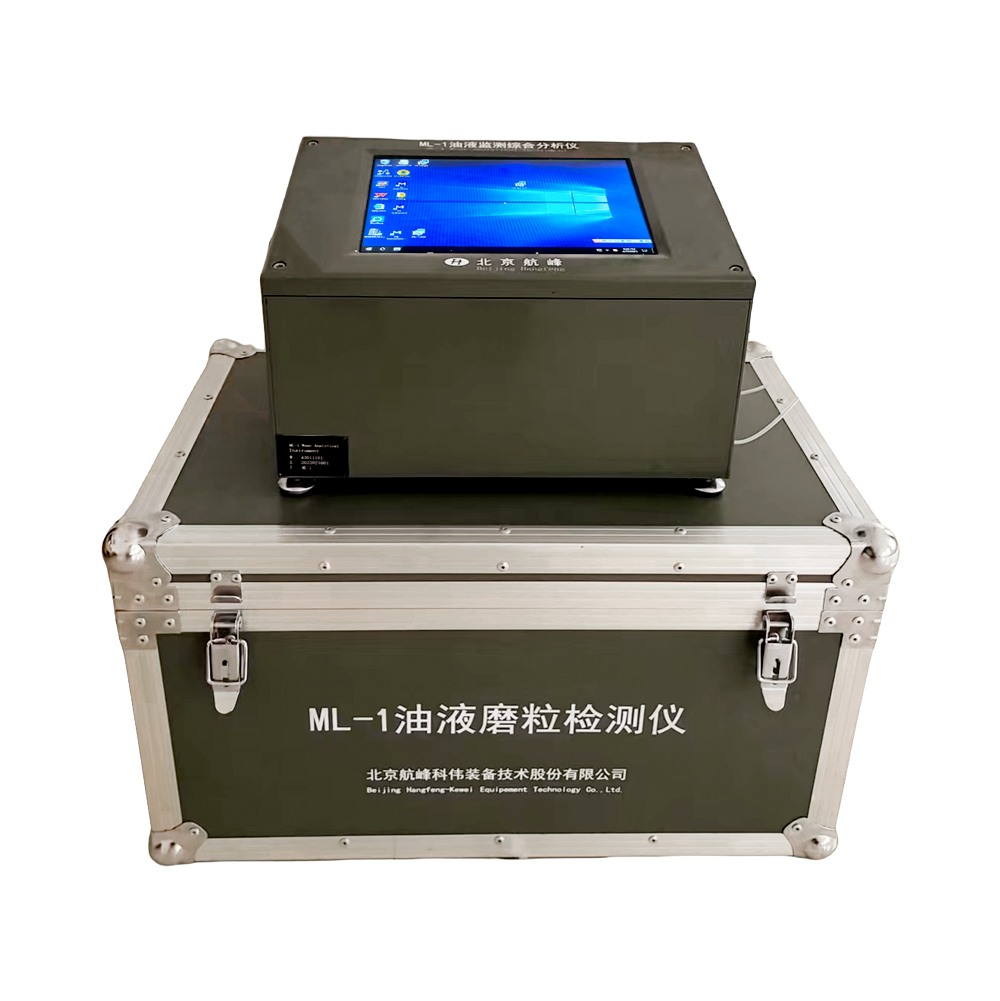
Wear monitors primarily use inductive magnetic fields to detect, size, and classify metal particles in lubricating oil.
The primary ROI of an oil debris monitor comes from catching abnormal wear phases months before vibration analysis or temperature sensors indicate a problem.
Procurement evaluation must prioritize particle size resolution, fluid compatibility, and seamless integration with existing CMS (Condition Monitoring Systems) or SCADA networks.
Successful implementation requires matching the sensor's flow rate limits and environmental tolerances to the specific machinery application.
Understanding sensor mechanics reveals why these devices excel at early fault detection. An effective Oil Debris Monitor relies on robust physics rather than complex moving parts. It uses electromagnetic principles to examine fluid health.
The baseline working principle involves electromagnetic induction. Oil continuously flows through a designated sensor bore. Inside this bore, an alternating magnetic field exists. Clean lubricating oil passes through this field silently. It causes no disruption. Metallic particles behave differently. They disturb the baseline magnetic field instantly. The system registers this disturbance as a measurable electrical signal. This signal alerts the central monitoring software to active wear.
Metals interact uniquely inside a magnetic field. The system measures precise phase shifts to classify the metal type. Iron and steel particles are ferrous. They increase the magnetic field strength. This creates a distinct positive phase shift. Copper, brass, and aluminum are non-ferrous. They disrupt the field differently due to eddy currents. They create a negative phase shift. This differentiation helps engineers pinpoint the exact failing component. Steel indicates bearing wear. Brass often points to failing cages or bushings.
Detection alone is insufficient. You need to know the severity of the wear. Signal amplitude directly correlates to particle mass. A larger particle creates a larger electrical spike. The monitor categorizes this debris into specific size bins. Common bins include 40µm, 100µm, and greater than 300µm. Small particles indicate normal break-in wear. A sudden spike in the >300µm bin signals severe spalling. This categorization allows you to track wear severity over time accurately.
Traditional maintenance relies on offline laboratory sampling. Technicians pull oil samples monthly. They send them to a lab and wait weeks for results. Inline sensors perform continuous, real-time flow monitoring. They analyze the fluid 24 hours a day. Continuous monitoring catches sudden wear events instantly. Lab sampling often misses these events entirely if they occur between scheduled tests.
Not every machine requires continuous fluid analysis. You must deploy a reliable Wear Monitor where the stakes justify the investment. Identifying these high-risk scenarios ensures a strong return on your maintenance budget.
Certain industrial applications simply cannot tolerate unexpected failures. Offshore wind turbine gearboxes represent a prime example. Replacing a gearbox at sea requires expensive crane vessels. Heavy mining equipment also demands continuous monitoring. A failed crusher halts entire mining operations. Marine propulsion systems rely on clean oil for safe navigation. In these scenarios, failure is unacceptably costly. Real-time monitoring becomes an operational necessity rather than a luxury.
Many teams still rely exclusively on vibration monitoring and thermal sensors. These methods are valuable but inherently limited. They serve as late-stage indicators. Vibration sensors detect mechanical imbalance. Imbalance happens after a gear tooth physically degrades. Thermal sensors detect excess heat. Heat generates from friction after catastrophic surface damage occurs. Oil debris analysis catches the precursor events. It detects micro-spalling weeks or even months earlier.
A successful deployment requires clear, measurable objectives. You must establish what success looks like for your facility. Common success criteria include:
Reducing unplanned downtime incidents by a specific percentage.
Extending the safe lifecycle of expensive synthetic lubricating oils.
Preventing secondary component damage by shutting down machinery early.
Transitioning maintenance personnel from reactive firefighting to proactive planning.
The market offers various technologies to track fluid contamination. Selecting the right approach depends entirely on your operational environment. No single technology solves every industrial problem flawlessly.
Basic magnetic chip detectors represent the oldest technology. Technicians install them in the oil pan. They require manual visual inspection. A mechanic must pull the plug to see if metal has accumulated. This method provides severely limited data. Advanced digital sensors offer a massive upgrade. They provide continuous data streams and automated alerts. They remove human error from the inspection process completely.
Modern sensors generally split into two categories: inductive and optical. Each has distinct strengths.
Comparison Chart: Technology Variations | |||
Technology Type | Working Principle | Best Operating Environment | Primary Limitations |
|---|---|---|---|
Inductive Sensor | Electromagnetic field disruption | Dark, highly aerated, or degraded oil | Cannot detect non-metallic contaminants (dirt, silica) |
Optical Sensor | Light blockage / laser scattering | Clean, transparent hydraulic fluids | Prone to false alarms from air bubbles or water ingress |
Magnetic Plug | Physical magnetic attraction | Low-budget, non-critical gearboxes | Requires manual inspection; provides no real-time data |
We must acknowledge a transparent truth. No single technology is flawless. Inductive sensors are highly durable in harsh environments. They ignore air bubbles and water droplets. However, they entirely miss non-metallic contaminants like silica or dirt. Optical sensors catch dirt easily. Yet, they trigger false alarms if the oil becomes cloudy. You must align the sensor technology with your specific fluid properties.
Evaluating vendor claims requires a structured approach. You cannot rely on marketing brochures alone. Procurement teams must scrutinize the technical specifications deeply.
You must evaluate vendor claims regarding detection accuracy. Demand evidence of performance across different flow velocities. Ask for data showing accuracy in varying oil viscosities. A sensor might perform well in thin hydraulic fluid. It might fail completely in thick, cold gear oil. Ensure the resolution matches your needs. Detecting 40µm particles is standard for high-end systems. Verify this capability through independent lab test results.
A sensor holds zero value if it cannot communicate. Assess the device's ability to transmit data seamlessly. It must support industry-standard protocols. Modbus RTU, CANopen, and 4-20mA analog outputs are mandatory. Verify how it integrates with your existing PLCs. Check if it pushes data directly to modern cloud dashboards. Siloed data creates operational bottlenecks. Your existing SCADA network must digest the sensor data effortlessly.
Industrial environments destroy fragile electronics. You need a rigorous durability checklist. Check the maximum operating pressure limits. Verify the ambient temperature ranges. Ensure the IP rating matches the installation environment. IP67 protects against heavy dust and temporary water immersion. IP68 is necessary for continuous submersion. Do not install an IP65 sensor on an outdoor mining excavator.
Evaluate the software layer critically. Raw, unfiltered data dumps confuse maintenance teams. The software must translate electrical signals into actionable insights. Does it provide clear, easy-to-read trend lines? Does it offer rate-of-change alerts? A good system warns you when the rate of particle generation suddenly accelerates. This acceleration indicates a rapidly failing component.
Buying the hardware is only the first step. Installation errors ruin data quality instantly. You must follow strict engineering guidelines during deployment.
Location dictates data accuracy. Emphasize the importance of installing the device on the correct return line. You must place it before the main oil filter. The filter's job is to trap debris. If you install the sensor after the filter, it reads perfectly clean oil. You will completely miss the failing component. Always capture the fluid profile immediately after it exits the gearbox.
Improperly sized sensors create dangerous flow rate bottlenecks. Every inline device creates a slight pressure drop. If the sensor bore is too small, it restricts lubrication. This restriction starves critical bearings of oil. Discuss the risk of pressure drops with your engineering team. Always match the sensor bore diameter to your existing pipe dimensions. Never compromise fluid dynamics for sensor placement.
New machinery generates metal during the break-in period. This is perfectly normal. You must establish a "normal" wear baseline during this phase. Explain this necessity to your technicians. Skipping baseline calibration causes endless false positive alarms early in the deployment. Once the break-in period ends, calibrate the alarm thresholds based on steady-state operation.
Hardware implementation requires human adaptation. Note the requirement to train maintenance personnel properly. They must learn to trust and act on the sensor data. Many veteran mechanics prefer relying solely on legacy inspection schedules. You must manage this cultural change. Show them how the data prevents catastrophic failures. Make the technology a tool that empowers them, not a system that replaces them.
Deploying advanced fluid analysis transforms reactive maintenance into a proactive strategy. The path forward requires logical shortlisting. Filter vendors strictly by environmental compatibility first. Next, validate their integration capabilities with your existing software. Finally, run a comprehensive cost-benefit analysis based on asset criticality. Compare the price of the sensor directly against the cost of an unexpected gearbox replacement.
Start small to ensure success. Recommend starting with a pilot installation on a single, high-risk asset. Use this pilot to validate data accuracy. Test the CMS integration thoroughly in a controlled environment. Once the pilot proves successful, you can confidently proceed with a fleet-wide rollout.
A: High-quality monitors typically detect ferrous particles down to 40µm and non-ferrous particles around 135µm. Micro-particle detection (under 10µm) isn't always necessary for macro-wear alerts. Massive mechanical failures usually generate larger debris clusters. Tracking particles above 40µm provides an incredibly reliable indicator of active surface spalling.
A: No. Inline monitors detect active physical wear and metal generation in real time. However, periodic laboratory analysis remains essential. Lab tests assess the chemical health of the oil. They track additive depletion, oxidation levels, and acid buildup. You need both methods for comprehensive fluid management.
A: Modern inductive sensors require minimal maintenance. They do not rely on optical lenses, so dark or dirty oil does not obscure the readings. Many systems feature self-diagnostic capabilities to ensure signal integrity. Occasional flushing during scheduled oil changes is usually sufficient to maintain accurate performance.